Emerging Degrees Reshaping Higher Education: A Nepali Student’s Perspective
Emerging Degrees Reshaping Higher Education: A Nepali Student’s Perspective
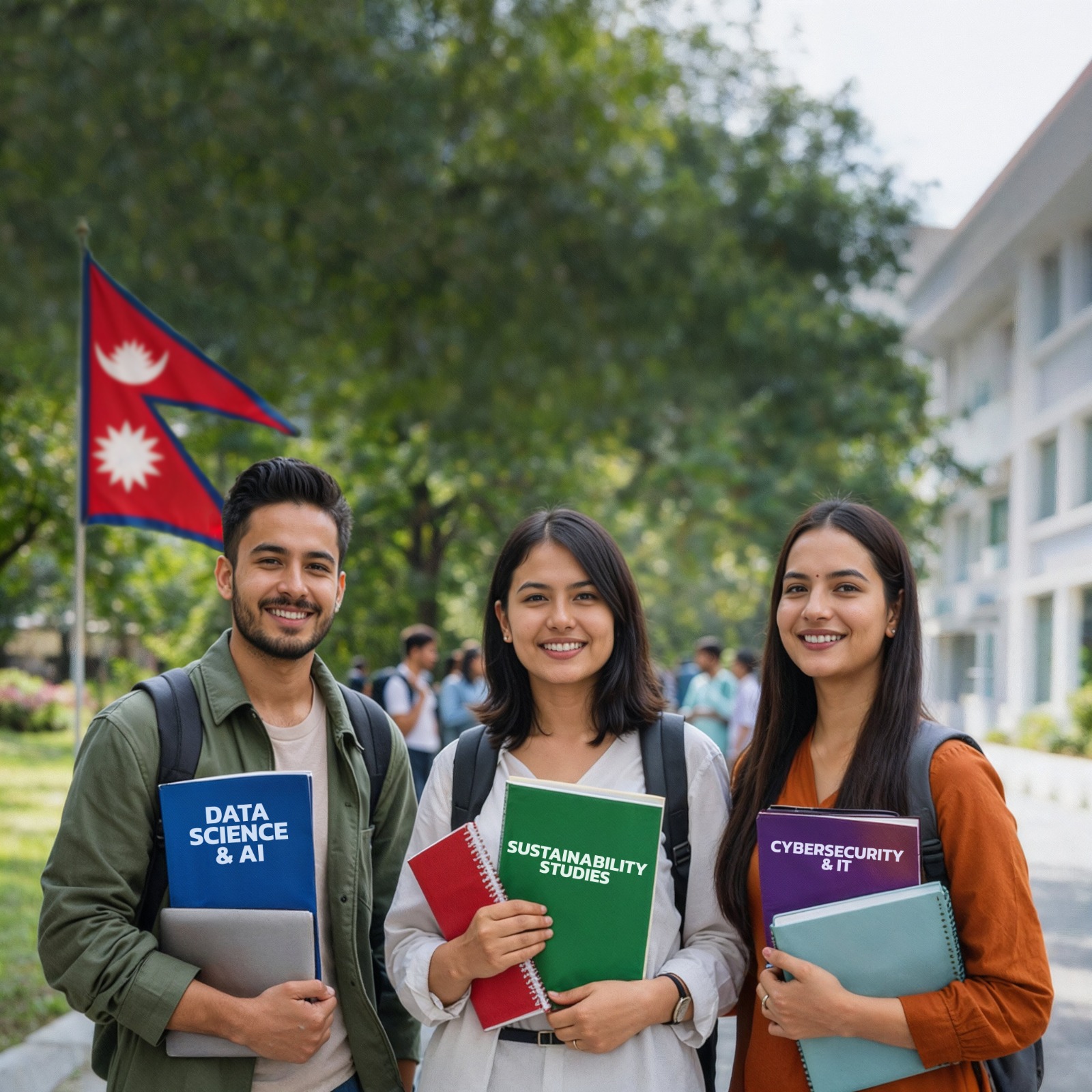
Higher education is changing quietly but decisively and Nepali students are standing right at the centre of this transformation. Degrees such as Data Science, Artificial Intelligence, Sustainability Studies, Cognitive Science, and interdisciplinary programs were almost unheard of just ten years ago. Today, they are offered by leading universities across Australia, the USA, the UK, Canada, and Europe; destinations traditionally preferred by Nepali students.
This shift is not simply about new course names. It reflects a fundamental change in how universities prepare graduates for a rapidly evolving global job market; one that Nepali students must understand before choosing their study pathways.
From Conventional Degrees to Future-Ready Programs
For many Nepali families, higher education choices have long revolved around familiar degrees. Engineering, Management, IT, Nursing, or Accounting. These programs were seen as safe, respected, and directly linked to employment and migration opportunities.
However, global industries no longer operate in rigid silos. Universities are now designing programs around skills, industries, and global challenges, rather than traditional academic departments. As a result, Nepali students today find themselves enrolling in degrees like Artificial Intelligence, Data Analytics, Sustainability, Liberal Engineering, or Interdisciplinary Business, often without realizing how new these programs actually are.
Why Traditional Degrees Alone Are No Longer Enough?
For decades, a single degree was expected to secure a lifelong career. Engineering led to engineering roles, IT to software jobs, and management to corporate positions. But this assumption no longer holds true.
Global employers; especially in Australia, the USA, and Europe, now seek graduates who can combine multiple competencies. For Nepali students competing in international job markets, this shift is particularly important. Employers value candidates who can integrate:
· Technical skills with analytical thinking
· Technology with ethics and sustainability
· Business knowledge with data and digital tools
At the same time, industries are evolving faster than university curricula. This has widened the gap between academic theory and practical workplace requirements making skill-based learning, internships, project portfolios, and certifications more critical than ever for Nepali students studying abroad.
Emerging Degrees Gaining Popularity Among Nepali Students
Driven by digital transformation, climate priorities, and global labour demands, several emerging fields are becoming increasingly relevant for Nepali students seeking international education and employability.
Key areas include:
· Data Science and Business Analytics
· Artificial Intelligence and Machine Learning
· Cybersecurity and Cloud Computing
· Sustainability Studies and Green Engineering
· Healthcare Management and Life Sciences
· UX/UI Design and Digital Experience
· FinTech and Digital Marketing
· Law with International Relations and Policy
These programs often offer flexible structures, industry-linked projects, and opportunities to build practical skills alongside academic learning: factors that are especially valuable for students aiming for post-study work opportunities.
Why This Matters in 2026 for Nepali Students?
In 2026, the challenge for Nepali graduates is not limited to completing a degree: it is about remaining competitive globally. Automation, AI-driven processes, and policy changes in student visa and post-study work frameworks mean that academic qualifications alone are no longer enough.
Many Nepali students graduate with strong theoretical knowledge but limited exposure to real-world tools, data analysis, or applied projects. International employers increasingly prioritize adaptability, problem-solving ability, and digital fluency over grades or degree titles.
Key limitations of traditional degrees include:
· Rapid skill obsolescence due to fast-changing technologies
· AI integration across almost every industry
· Hiring shifts towards portfolios, internships, and certifications
· Skill gaps in communication, applied problem-solving, and digital literacy
Why Skills Are Becoming More Important Than Degrees?
One of the most significant global hiring trends affecting Nepali students is the move toward skills-based assessment. Employers now evaluate candidates through project work, internships, practical assignments, and real-world experience rather than relying solely on academic transcripts.
While a degree provides a strong foundation, skills demonstrate readiness to work. Proficiency in areas such as data handling, coding, research application, digital marketing, or sector-specific software often determines employability and career progression.
Skills also allow Nepali students to:
· Adapt across industries and job roles
· Strengthen post-study work and migration prospects
· Stay relevant despite policy or market changes
· Build long-term career resilience in global markets
Making the Right Academic Choice
Emerging degrees are not trends or experiments: they are responses to a world that demands flexibility, innovation, and interdisciplinary thinking. For Nepali students, the critical question is not whether a degree is new, but whether it is well-structured, industry-aligned, and personally meaningful.
At Education Park, we encourage students and parents to look beyond degree titles and focus on long-term outcomes. Skills, employability, adaptability and global relevance. An informed academic choice today can define career success tomorrow.
The future belongs to students who combine solid academic foundations with practical skills and a mindset of continuous learning; qualities that Nepali students are more than capable of achieving with the right guidance and preparation.